
The Chaklag and Shindi Series by Maila Alog
- Cat De Jesus

- Apr 10, 2021
- 4 min read
Identity, Community Dialogue, and Cultural Accountability in Contemporary Indigenous Fashion
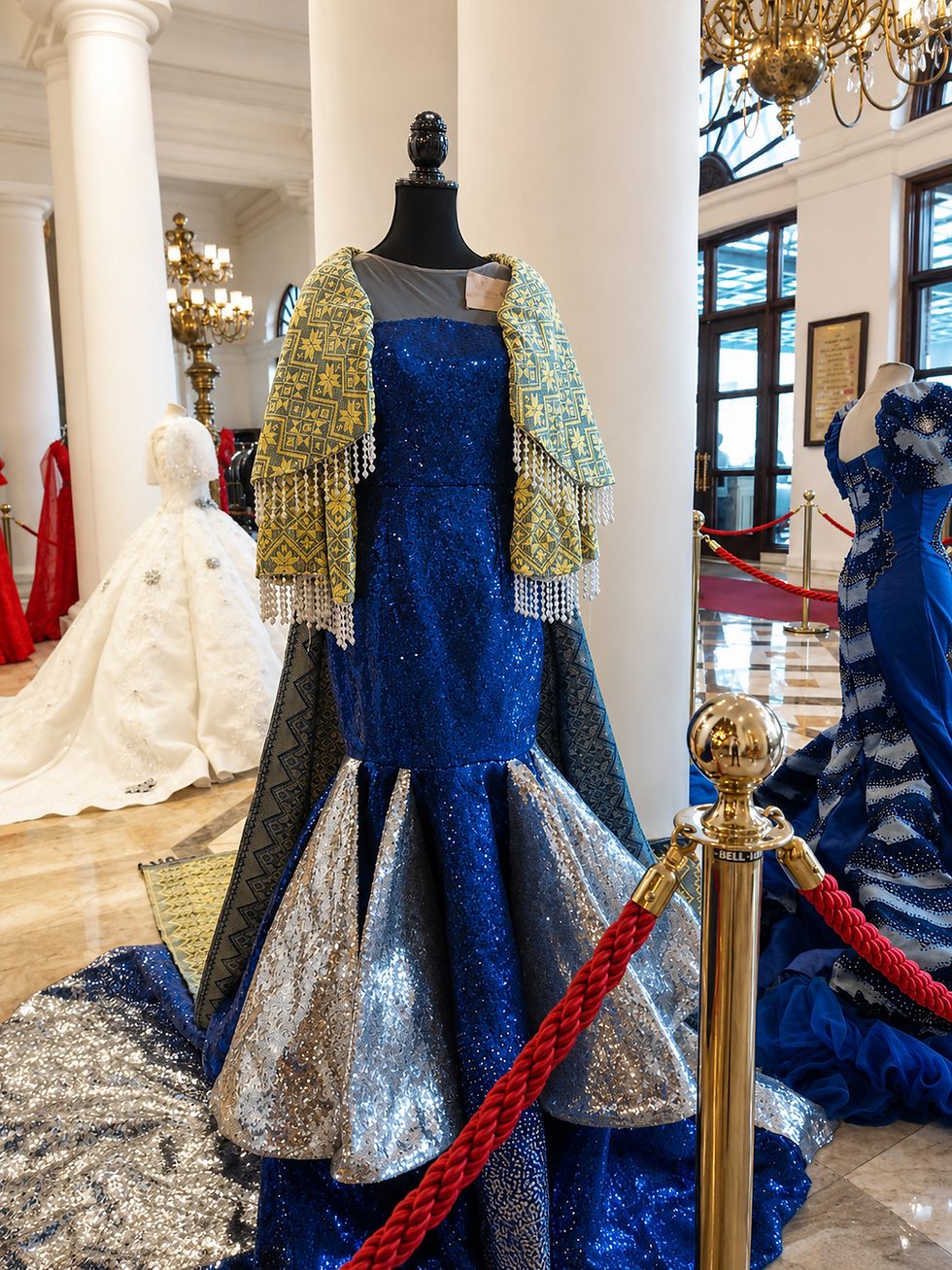
Baguio City — The Chaklag and Shindi Series stands as one of the most reflective and culturally grounded bodies of work by Maila Alog. Unveiled during Ivy Fashion Ball II: Summer Gothic, the series did not emerge as a finished concept, but evolved through lived experience, community discourse, and conscious cultural responsibility. More than paired garments, Chaklag and Shindi form a narrative of strength and grace, authority and humility, shaped by both heritage and dialogue.
Maila Alog comes from an Ibaloy practitioner family and is herself a culture bearer, having begun to follow and observe the Ibaloy way through important phases and celebrations of her life. Her grounding is not academic nor performative, but lived and practiced, informing how she approaches Indigenous symbols—with familiarity, reverence, and accountability.

Shindi: Ritual Meaning, Discourse, and Cultural Responsibility
Shindi speaks of restraint, reflection, and accountability.
The Shindi narrative emerged earlier, in March 2020, through an online debate within Indigenous communities. The discussion was initiated by fellow Indigenous Peoples—many of whom, while Indigenous by identity, were non-practitioners of specific Ibaloy ritual traditions. The debate arose when a commercially produced, mass-woven blanket was used as a design reference inspired by the Shindi.
Traditionally, the Shindi is a ritual blanket of the Ibaloy, used by the namshet—a well-off, respected Ibaloy who is a practitioner and believer of Ibaloy ways. The namshet actively participates in ancestral rituals and community obligations. The Shindi is used during the tayaw, a sacred dance performed to honor ancestors. In this context, the Shindi is not merely a textile; it is a marker of status, spiritual responsibility, and lived practice, governed by strict cultural protocols.
The concerns raised were rooted in cultural boundaries—the distinction between commercially circulated textiles inspired by tradition and ritual objects whose meaning remains sacred regardless of material reproduction. Although the material referenced was already commercialized and detached from ceremonial use, the symbolic weight of the Shindi required deeper care.
Coming from an Ibaloy practitioner lineage, Maila Alog engaged the discourse not defensively, but through listening and reflection. The exchange became an important moment of recalibration. As a result, Shindi was reframed as an interpretive design, not a representation of the ritual blanket itself. Its final form avoided reenactment of ceremonial function, emphasizing grace, fluidity, memory, and continuity, rather than ritual authority or performance.

Chaklag: Authority Earned, Named by the Community
The story of Chaklag began during the height of the pandemic. On October 23, 2020, when physical runways were paused, an early design was released online and the public was invited to participate in an uncommon act in fashion: help naming the piece.
Among many thoughtful responses, one stood out for its cultural depth and clarity. The name “Chaklag”—proposed and articulated by Ava May Davaoen—was selected as the winning entry.
As explained by Miss Ava, Chaklag refers to a body tattoo traditionally earned by a Maimong (warrior/headhunter) through a rite of passage, often accompanied by a soklong or headdress. It is not decorative; it signifies bravery, authority, and transition into adulthood—authority that is earned, not assumed. Paired with the word vest (to clothe with authority or right), the name perfectly captured the garment’s intent.
Visually, the Chaklag Vest embodied this meaning through strong structure, deliberate lines, and a hooded form that suggests protection and presence without literal replication. It translated the essence of earned authority into contemporary fashion language.
In recognition of her contribution, Miss Ava May Davaoen received the first prototype of the Chaklag Vest as her prize—a gesture affirming shared authorship and honoring the cultural knowledge that shaped the design. The inaugural piece thus became a tangible symbol of insight, responsibility, and earned presence.

Unveiled as a Series, Carried Forward as Dialogue
When formally presented together at Ivy Fashion Ball II: Summer Gothic, the Chaklag and Shindi Series stood as a reflective pause within a high-energy, team-based runway. Under the M.A.79: Ethnic & Glamour design philosophy, the series demonstrated how Indigenous grounding can inform contemporary fashion without becoming literal, extractive, or costume-driven.
Together, the two pieces form a deliberate dialogue:
Chaklag — strength, structure, and authority earned through rites of passage
Shindi — grace, humility, and cultural accountability rooted in lived practice
Fashion as Living, Relational Story
What ultimately defines the Chaklag and Shindi Series is how it was shaped—through community naming, respectful critique, and conscious reframing by a designer who is both a creative and a culture bearer. Born in isolation, challenged through dialogue, refined through accountability, and revealed on a shared stage, the collection affirms that Indigenous fashion is living and relational.
With the name Chaklag gifted by Miss Ava May Davaoen—and honored through the awarding of the first prototype—and the lessons of Shindi shaped by a March 2020 community discourse, the series reminds us that to create with heritage is to carry both freedom and responsibility, and that true strength in fashion, as in tradition, is earned through respect and practice.


Comments