
Research Field Visit and Cultural Learning in Palawan Binuatan Weaving and Butterfly Eco Garden & Tribal Village

I arrived in Palawan in August 2024 primarily to fulfill my duty as Chief Examiner of the PNPACAT 2024. It was an assignment that required full focus and responsibility—one that I completed with the seriousness it deserved. Yet once my official duties were accomplished, I felt that familiar pull to listen, to learn, and to be present with communities whose stories are often woven quietly into the fabric of our nation. Palawan, known not only for its natural beauty but also for its rich Indigenous heritage, offered an opportunity I could not pass up. What followed became a deeply meaningful research field visit and cultural learning experience—one that reaffirmed why Indigenous knowledge must always be approached on the ground, through people, not just books.
Learning from Threads and Hands at Binuatan Weaving
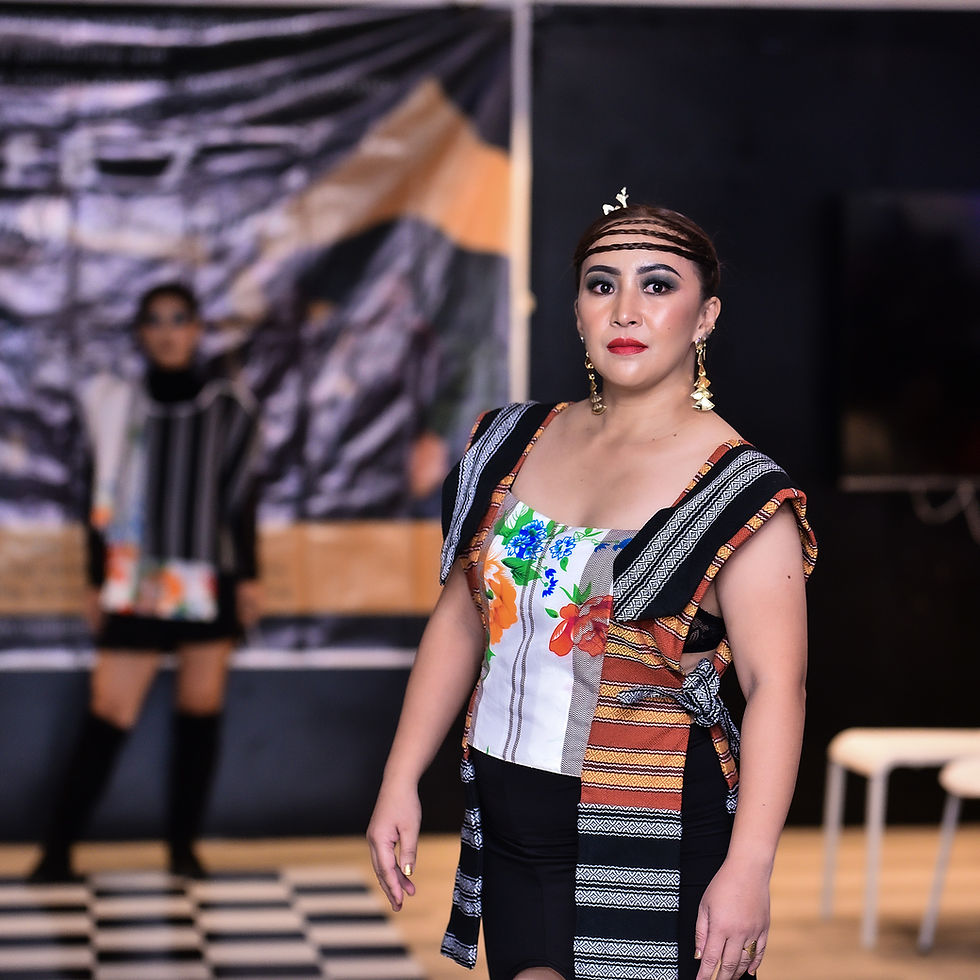
My visit to Binuatan Weaving was a lesson in patience, dignity, and continuity. Here, weaving is not merely a livelihood—it is memory, identity, and survival translated into thread. Each piece told a story of hands that have learned from elders, of patterns passed down not for trend, but for meaning.
Watching the weavers work, I was reminded that Indigenous textiles are never accidental. Every color choice, every motif, every rhythm of the loom is deliberate. These are not products detached from people; they are extensions of lived experience. As someone who has long worked with Indigenous wear and cultural documentation, seeing the process firsthand deepened my respect for the discipline and quiet strength behind each woven piece.
Encountering Living Culture at Butterfly Eco Garden and Tribal Village
Later that day, I visited the Butterfly Eco Garden and Tribal Village, a space where culture, environment, and education meet. Walking through the site, I encountered not a performance staged for visitors, but stories shared with sincerity—about land, ancestry, belief systems, and daily life.
The experience reminded me that Indigenous cultures in Palawan are deeply connected to nature. Knowledge is ecological, spiritual, and communal. Culture here is not preserved behind glass; it is lived, spoken, and practiced. Each interaction reinforced the importance of context—that Indigenous identity cannot be separated from land, and tradition cannot be understood without listening.
Wearing Two Roles, Learning with One Heart
That day in Palawan, I carried two roles with me: one as a police officer entrusted with a national responsibility, and another as a cultural worker committed to ethical engagement with Indigenous communities. Completing my duty as Chief Examiner before conducting this field research was important to me—it ensured that my presence in these communities was grounded in respect, not convenience.
This visit was not about collecting artifacts or sourcing designs. It was about learning—learning how communities sustain culture, how they protect meaning, and how knowledge is shared when approached with humility.
Reflections
August 6, 2024, became more than a date on my calendar. It became a reminder that even within the structure of uniformed service, there is space—indeed, a responsibility—to listen and learn from the people whose histories predate our institutions.
Palawan taught me, once again, that Indigenous cultures are not footnotes to our national story. They are foundational chapters. And the only way to honor them is to show up, to listen carefully, and to carry their stories forward with care.
Field research does not always begin with a plan. Sometimes, it begins with presence—and the willingness to learn after duty calls.


Comments